
Yuba City City Directory Holdings
Yuba City has a useful historical research shelf, but the exact local city-directory run is not documented in the available finding aids. The Museum Bulletin, property survey, cemetery index, Sanborn maps, and census are verified resources. The publisher, years, shelf location, and reverse-directory span for local city or telephone volumes remain unverified. Keeping those facts apart gives a search a real starting point instead of a guessed title.
| Collection | Years | Where Held | Access |
|---|---|---|---|
| Yuba City city, telephone, or reverse directories | Publisher and years not verified | Sutter Main Library, reference desk | Ask staff for a catalog and shelf check |
| Museum Bulletin | 1954 to Spring 2026, with gaps | Sutter County Museum, indexed PDFs | Free online subject, author, and graphics indexes |
| Historic-property survey | 2007; 385 selective properties | Museum area and street files | Free online browse and linked PDFs |
| Yuba City Sanborn maps | January 1890; May 1899; November 1909 | Library of Congress | Free online map sheets |
| Federal census named schedules | Through 1950 under the 72-year rule | National Archives | Online research route; collection access varies |
The verified rows can support a household trail while the directory row is being checked. The 2007 survey covers houses, businesses, government and agricultural structures, the Plumas Street district, and the Sacramento Northern Railway, but it is selective rather than a complete parcel roll. No first directory year, last printed year, publisher, reverse run, or local abbreviation key should be supplied until Sutter Main Library or the Museum confirms it. The Museum sends legal-record questions to the Sutter County Clerk-Recorder, newspaper questions to Yuba County Library, and independent local-history questions to Sutter Library.
Note: A directory year is a publication clue, while the Recorder's online index starts on December 1, 1993 and answers a different question.
The Yuba City City Directory Gap
A missing catalog entry is still useful evidence. It tells a researcher to ask for the shelf inventory before naming a volume, copying a citation, or treating a reverse list as a complete resident roll. The exact Yuba City and Marysville directory publishers, year runs, telephone books, and criss-cross holdings were not established by an authoritative online finding aid. A reference request is therefore part of the method, not a last resort.
Sutter County Library Main is at 750 Forbes Avenue and can be reached at (530) 822-7137. Its posted hours are Tuesday through Thursday, 9 a.m. to 6 p.m., and Friday through Saturday, 9 a.m. to 5 p.m. Research computers are free. Ask whether a catalog record, local-history shelf, microfilm item, telephone run, or reverse volume can be checked, and request the title page and year before relying on a citation.
Sutter Main Library
750 Forbes Avenue
(530) 822-7137
Tue-Thu 9-6; Fri-Sat 9-5
Free research computers
Sutter County Museum
1333 Butte House Road
(530) 822-7141
info@suttercountymuseum.org
Wed-Fri 9-5; Sat noon-4
Free research service
The safest local citation records the holding office, title, publisher if shown, year, page or image number, and whether the item is a name list or a street list. Do not fill an empty field with a familiar national publisher or an assumed year. The uncertainty is a key result for anyone planning a Yuba City city directory search.
Research gap. No verified local publisher, year run, shelf location, or photographed sample entry was found, so the Library and Museum should confirm those details before citation.
Yuba City Museum Research Routes
The Sutter County Museum collections page is the strongest verified local starting point when a directory title is unknown. It describes more than 20,000 artifacts and 8,000 photographs, plus a research service that can point a family-history question toward the right collection.
The Museum does not replace the record custodian. It routes legal records to the Clerk-Recorder, newspapers to Yuba County Library, and independent local-history work to Sutter Library. Research hours are scheduled, requests are handled in order, and no fee or fixed turnaround is stated. The service does not provide appraisal, authentication, or valuation.
The collections overview can be viewed at the source before a request is sent:
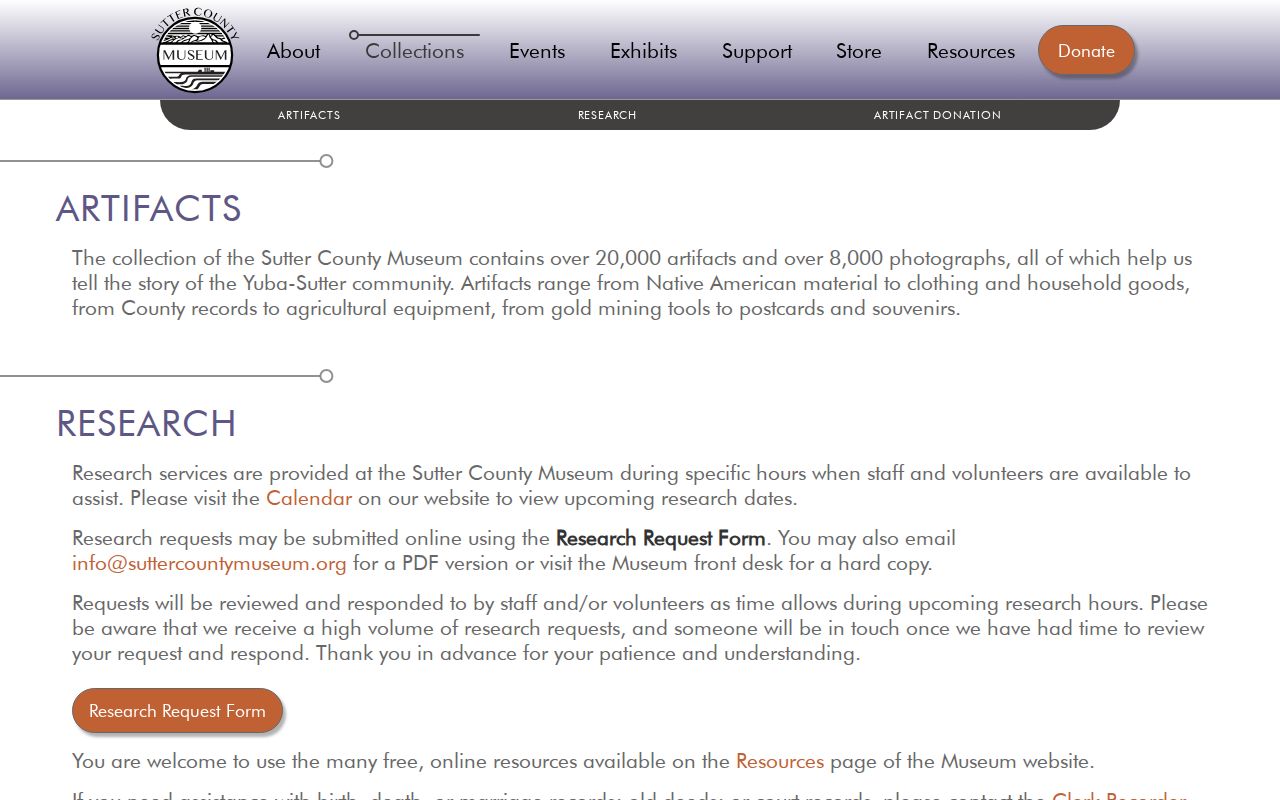
The image gives the broader context for a directory search: photographs, objects, and local stories may supply a name or place clue even when no directory volume is listed. Those clues still need a date and an independent record.
The Museum research form is the documented online access channel:
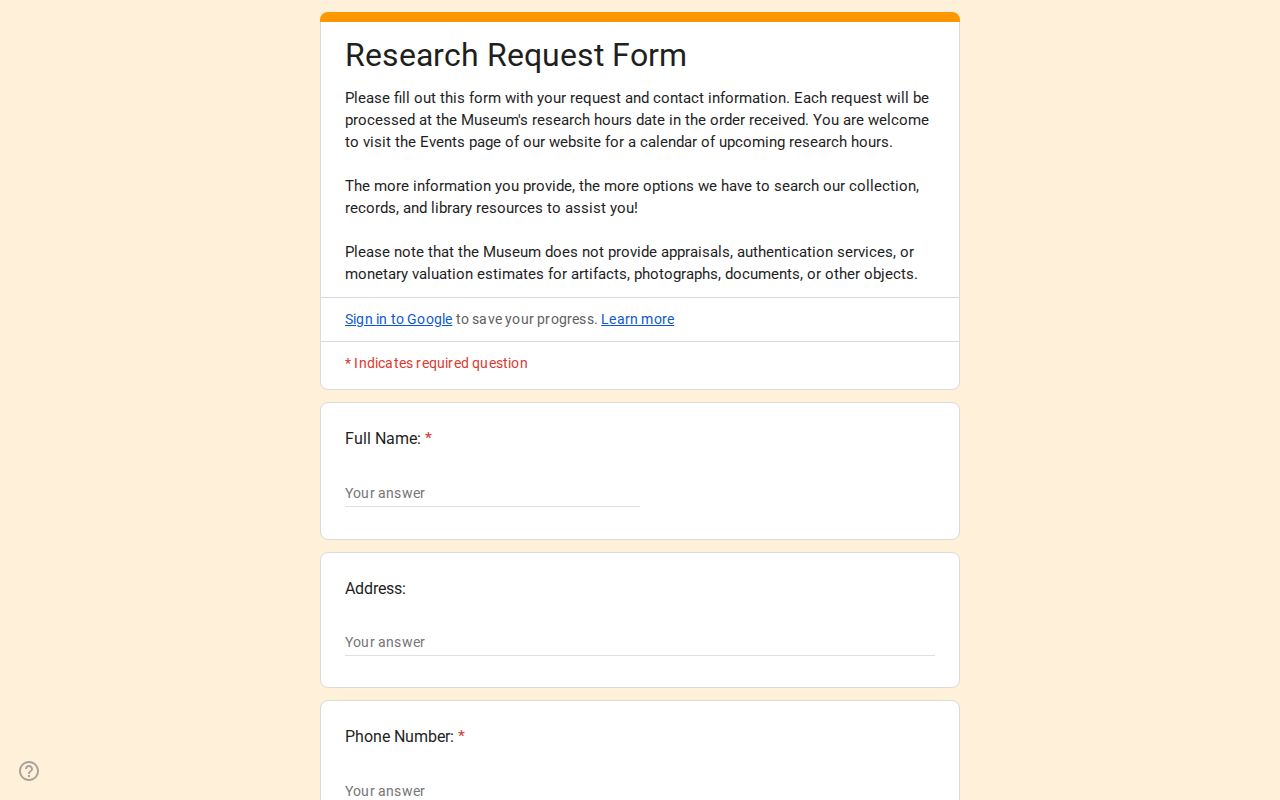
The form image shows why a focused request works best. Supply the details that the form asks for, then let the staff route the question:
- Full name is required; address is optional.
- Phone and email are required for follow-up.
- Research topic is a required short-text field.
- Use choices include Personal/General, School, Commercial/Publication, and Other.
- Assistance choices include General, Collection, Photograph, Family History, and Other, followed by a detailed inquiry field.
Names, dates, addresses, and the desired image or record should be stated in the detailed inquiry. That gives the Museum a way to compare the request with its properties, Bulletin, cemetery, and photograph resources without pretending that an unverified directory run exists.
Yuba City Bulletin Indexes
The Museum Bulletin began in 1954 and has indexed PDFs plus subject, author, and graphics indexes through Spring 2026. The run has gaps: 1954-69 is incomplete, issues are mostly quarterly from 1970-97, sparse from 1998-2001, mostly quarterly from 2002-17, and seasonal from 2018-26 with pandemic gaps.
The Bulletin index and issue page is a practical companion to a Yuba City city directory request. Search surnames, streets, schools, churches, communities, cemeteries, floods, farms, businesses, and portraits. The recent author index lists McComas Diary Parts II-IV in Summer and Fall 2024 and Spring 2025, a useful example of how a local name or household may surface outside a directory.
The Bulletin index page can be checked online here:
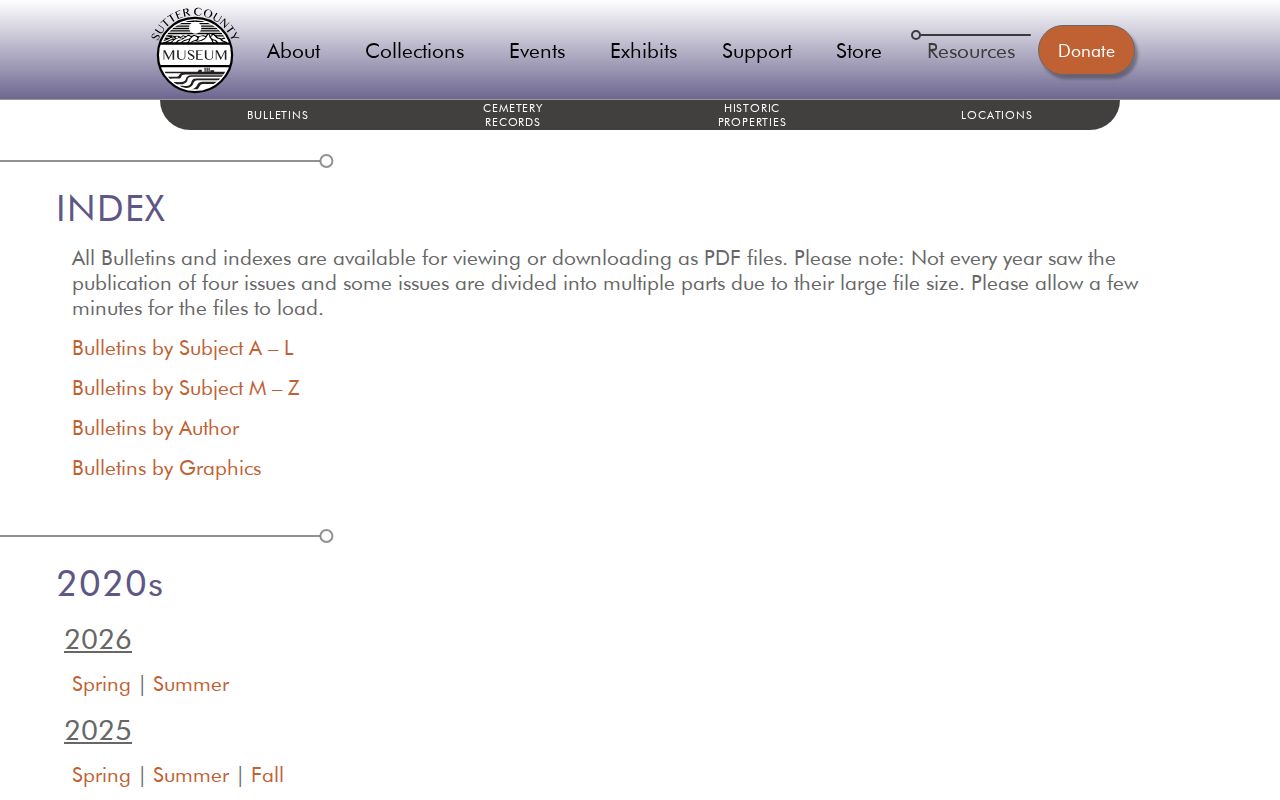
The Bulletin is not a complete resident roll. Use an indexed hit as a lead to a person, street, group, or event, then compare it with the census, a deed, a cemetery entry, or a verified directory page. A gap in the Bulletin is also not proof that a household left Yuba City.
Note: Bulletin gaps can reflect irregular publication or indexing, so a missing name needs a second source before it becomes a move or death conclusion.
Reading a Yuba City City Directory Entry
No authoritative local sample page or abbreviation key was accessible, so the inventory below is a request checklist rather than a claim about every Yuba City volume. Ask the Library or Museum for a photographed sample that shows the title page, publication year, name page, street page, and symbol key. Then mark which fields are truly printed.
| Entry field | What to record or confirm |
|---|---|
| Name | Record the exact spelling, initials, suffix, and any former-name form shown in the local entry. |
| Occupation | Check whether a historical occupation line is present; its appearance in a Yuba City volume is not verified. |
| Spouse | Look for a parenthetical or linked spouse name, but do not assume the field exists without the sample. |
| Address | Capture the house number and street exactly, then compare it with maps and other dated records. |
| Owner/renter mark | Ask whether the local volume uses such a mark; no Yuba City sample confirms one. |
Read the entry as a dated clue, not as proof of every person at an address. A name line may describe a household head, a boarder, a business contact, or another role. Only the original page, its key, and a second record can show which interpretation fits.
Note: A local sample page matters because ordinary abbreviations and symbols differ by publisher, year, and volume type.
Yuba City Directory Terms
Four terms help sort a name-led page from an address-led page. The definitions describe the research task, while the local finding aid still must confirm which format appears in Yuba City.
- Criss-cross directory
- An address or street-order list used to work backward from a house number or street to a name. The local run is unverified.
- Householder index
- A name-led index that may point to a household entry. It should not be treated as a full list of every person in a home.
- Abbreviation key
- The publisher's guide to short forms and marks. Photograph it before reading entries so a symbol is not guessed.
- Directory year
- The publication year attached to a volume. It may not equal the exact date when an address or household changed.
For a careful citation, save the cover or title page, the page number, the entry image, and the key. If the volume has both name and street sections, note which one produced the clue. That distinction prevents a house-history note from being mistaken for a complete list of occupants.
A Yuba City Records Timeline
Local record history supplies useful anchors even though it does not establish the first or last city directory. Each dated point below is independently supported in the research, and the courthouse fires require care because the exact destroyed record groups were not inventoried.
- 1849: Yuba City was founded.
- February 18, 1850: Sutter County was incorporated.
- 1856: Voters fixed the county seat at Yuba City.
- 1858: The first permanent Yuba City courthouse was built.
- 1871 and 1899: The courthouse burned; a replacement stood in 1873 after the earlier fire.
- 1954: The Museum Bulletin began.
- 1975 and 2007: The Museum transferred to the County, and the selective 385-property survey was completed.
The 1871 and 1899 fires explain why a researcher should ask about surviving series, but they do not authorize a claim that a particular deed, probate file, or directory was lost. The record gap remains a question for the custodian.
Note: Courthouse fires are documented local history, not proof that a named Yuba City directory or deed series disappeared.
Tracing Households Through Yuba City City Directories
A household trail works best when each directory clue is paired with a census, map, deed, cemetery, or newspaper source. Start with the local shelf question, then keep a simple log of names, dates, addresses, and source limits. Census named schedules are available through 1950 under the 72-year rule, giving useful anchors between older publication years.
The National Archives census research gateway is the documented federal route for those schedules:
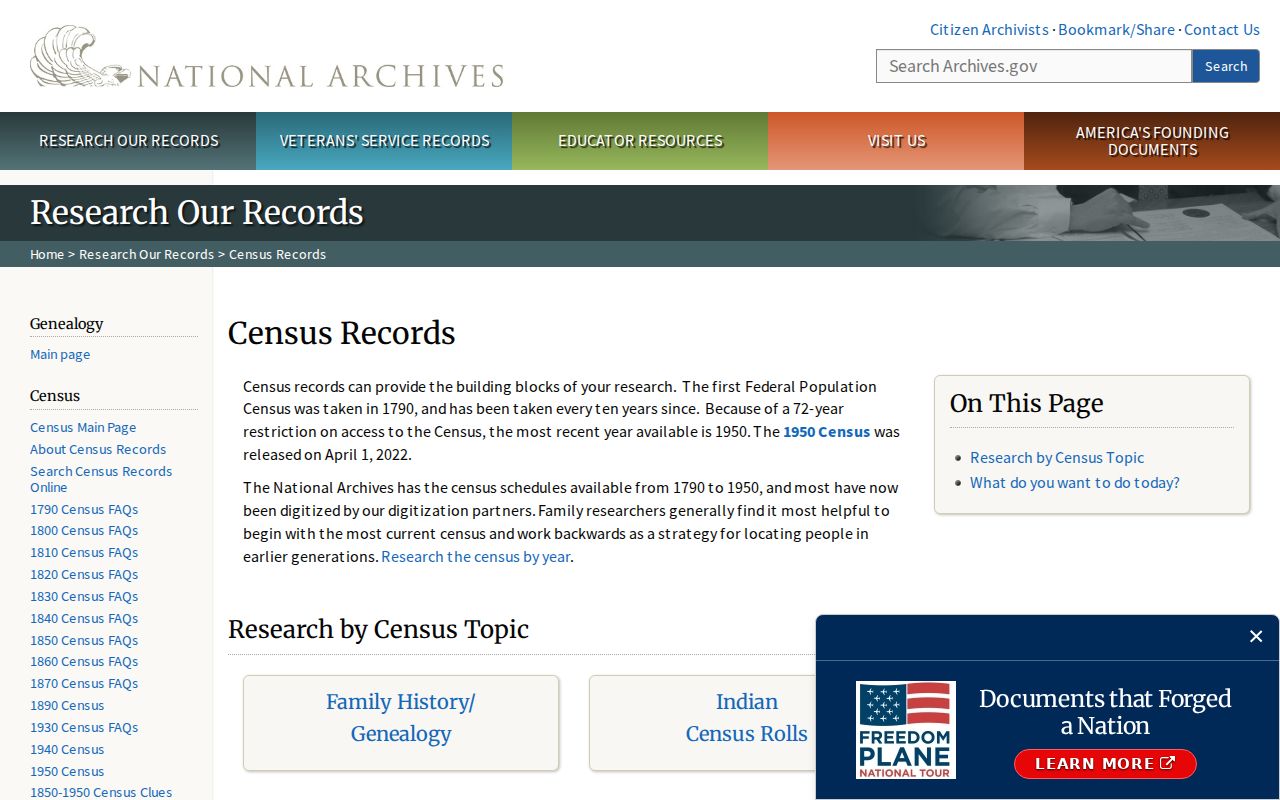
The census image points to a second layer of evidence. It can test whether a name, household shape, and address fit the same time period, but it remains a dated enumeration rather than a live list.
- Gather the clue: Write the full name, former names, initials, address, relative, and approximate date before requesting a volume.
- Confirm the holding: Ask Sutter Main Library and the Museum for the title, publisher, year, format, and any gap around the target event.
- Read the entry: Copy the name, occupation, spouse, address, and owner/renter mark only when the original page and key support them.
- Pair the dates: Compare nearby directory years with the matching census schedule, keeping same-name people separate until place and household facts align.
- Follow the place: Use the 1890, 1899, and 1909 Sanborn maps, the Museum property files, and the legal description when street wording changes.
- Close the trail: Check the Museum cemetery index, Bulletin indexes, newspapers, and public probate material for a documented endpoint.
A disappearance from a volume can mean death, a move, nonpublication, a changed street name, an omitted person, or a missing issue. Date each conclusion and state which source supports it. The absence of a name alone does not tell which explanation is correct.
Yuba City City Directory Cross-Checks
When a city directory volume is missing, the strongest substitutes are specific, dated collections rather than a broad claim that everything is online. The Museum cemetery index allows a surname or cemetery browse across most Sutter and Yuba cemeteries, including Yuba City, Yuba City Mausoleum, Sutter-Yuba Memorial, Sutter and South Butte, Live Oak, Meridian, Nicolaus, Pleasant Grove, Marysville, and Marysville Catholic.
The Museum cemetery resource can be opened before a request:
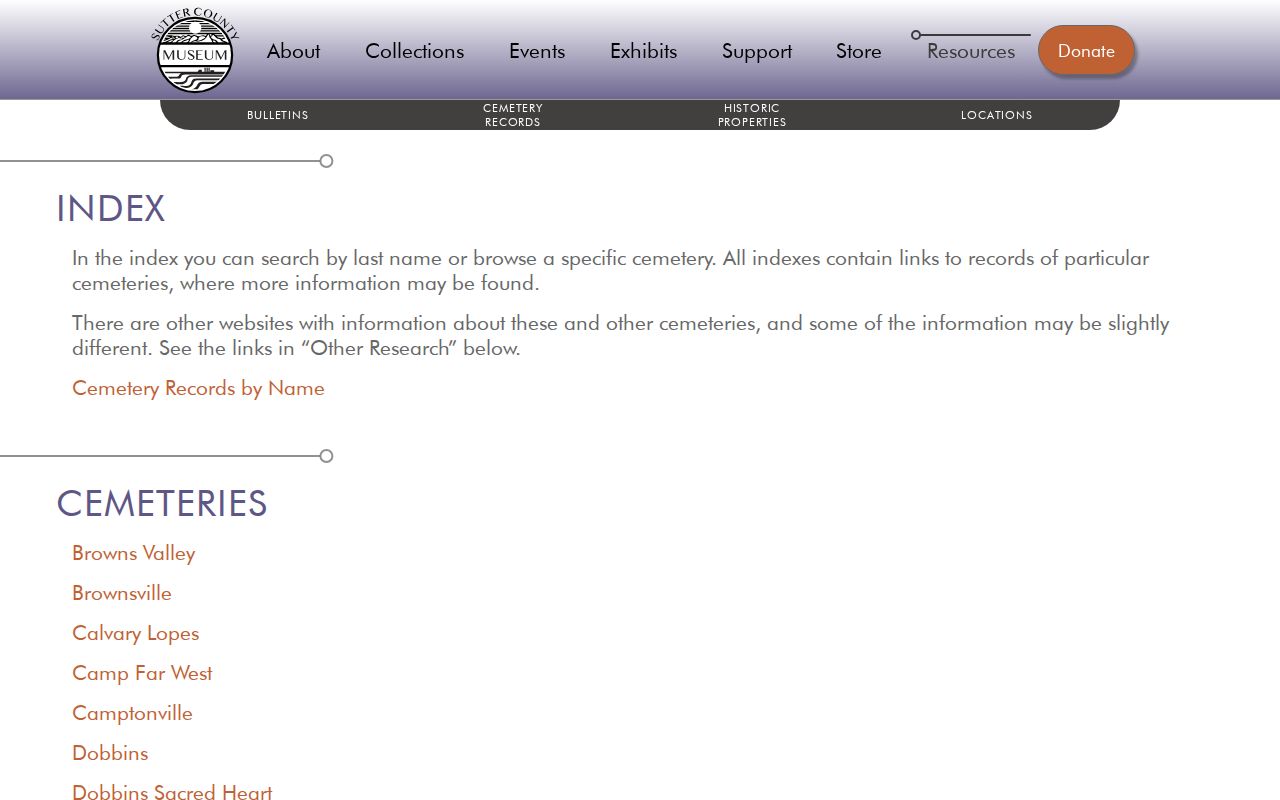
Its entries link to cemetery detail, which can help test a death date or family connection. For buildings, compare the January 1890, May 1899, and November 1909 Yuba City Sanborn sets. They show footprints, uses, outbuildings, streets, and numbers, but the verified online run stops with 1909.
The Museum's exhibits add human context without turning community history into an invented directory entry. They cover Nisenan, Black, Chinese, Hmong, Japanese, Mexican, and Punjabi histories. Research can therefore test accented, unaccented, compound, and former surnames, then cross the Feather River when a newspaper, church, business, or cemetery clue points toward Marysville. The Museum reports the Chinese Sutter population rising from 2 in 1860 to 274 in 1900, a Punjabi gurdwara opening in 1969 with Nagar Kirtan beginning in 1980, and about 3,500 Hmong residents in Yuba-Sutter by 2020.
| Source | Research use and limit |
|---|---|
| Directory shelf | Best for a dated name or address clue; local publisher and year run still need confirmation. |
| Museum Bulletin and survey | Strong for local names, streets, buildings, groups, and source leads; neither is a complete resident roll. |
| Census schedules | Useful household snapshots through 1950; compare place and family facts before joining same-name entries. |
| Recorder and probate | Useful for legal transfers or public family roles; access follows the custodian and does not prove every occupant. |
Newspaper work belongs with California Digital Newspaper Collection and the Yuba County Library route identified by the Museum. Legal instruments belong with the Sutter County Clerk-Recorder. When an old entry needs a modern record check, the Yuba City resident lookup workflow keeps the name tied to a current custodian and a stated limit.
Lawful use. Historical directory work is for family history, house history, reconnection, and civic research. Do not use a directory or compiled lead to stalk, harass, intimidate, or expose a protected person.